How Web Design Services Improves CRO in Buffalo, NY
For businesses in Buffalo, NY, website design is more than a visual matter. It is a direct lever for CRO, shaping how visitors move from attention to action. A site built with conversion-driven design can turn local traffic from web design, seo services, digital marketing, ai experts into qualified leads, calls, contact forms, and confirmed appointments. When the user experience supports the customer journey, every click has a greater chance of becoming trackable engagement.
In a city with a strong local identity and highly competitive service sectors, your website has to do more than appear polished. It needs a clear visual structure, clear trust cues, quick-loading performance, and a low-friction CTA. That matters whether your audience is browsing from Downtown Buffalo, the Elmwood Village, North Buffalo, or the Southtowns. For local buyers, timeliness and ease of use often decide which business gets the lead.
What Conversion-Focused Web Design Involves
A conversion-focused website design approach is the practice of building a website around what users want and the sales funnel, not just aesthetics. The goal is to reduce bounce rate, increase click-through rate, and increase the chance that a visitor takes a desired action. That action might be contacting your office, filling out a form, scheduling a visit, or requesting a quote.
At its core, conversion rate optimization depends on how well the design supports user experience. If the page is confusing, laggy, or cluttered, people leave. If the site has a clear site architecture, intuitive navigation flow, and call-to-action buttons placed where users expect them, they stay engaged longer and are more likely to convert.
Strong visual hierarchy is especially important. Headlines, supporting copy, imagery, and microcopy should work together to guide attention naturally. The most effective web design does not force users to think too hard. It makes the next step obvious while reinforcing trust and credibility at every stage.
In practice, this means every part of the site should support content relevance. A homepage, service page, or landing page should speak directly to the audience’s needs, objections, and timing. When design and content strategy are aligned, the result is better lead capture and a smoother customer journey.
Why Buffalo Businesses Need a Smarter Website Plan
Buffalo, NY businesses contend with a special mix of local search intent, seasonal demand, and small business competition. Many prospects are searching for nearby providers, comparing options fast, and using mobile devices while on the move. That means your website has to perform well in real-world conditions, not just on a desktop mockup.
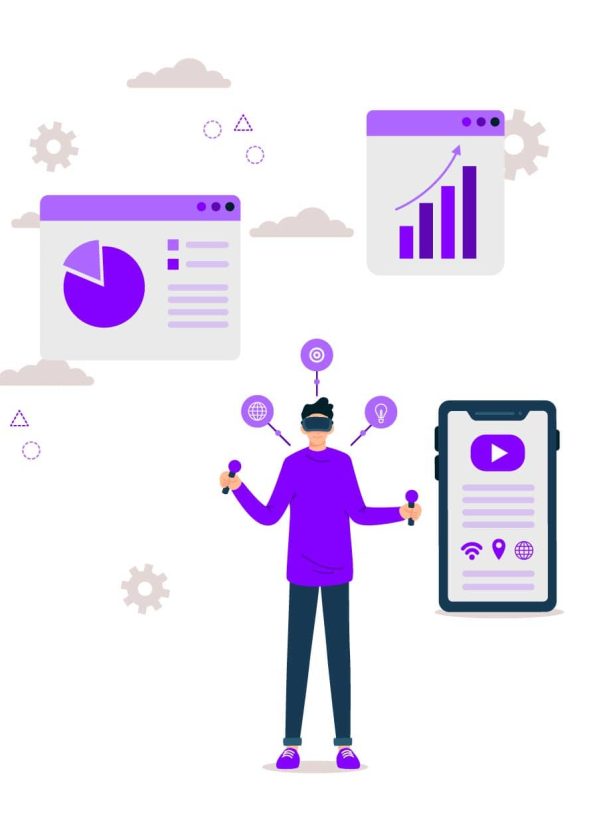
Local search intent is especially crucial for service businesses. Someone looking for a contractor, dentist, attorney, or home service company in Buffalo often wants quick answers and immediate reassurance. They are not reading every word. They are scanning for relevance, trust signals, and a clear path to action. Effective web design meets that behavior with concise content, visible contact details, and a simple conversion path.
Small business competition in Buffalo can also be fierce within specific neighborhoods and service categories. Whether you are targeting clients near Allentown, along Elmwood, or across Western New York, your site needs to communicate why you are the better choice. That is where user experience, navigation, and landing page design make a measurable difference.
Mobile users are a major factor too. Many local customers browse while commuting, comparing vendors, or dealing with urgent needs during winter weather. In colder months, people often rely more heavily on mobile browsing to find nearby services quickly. A responsive design with mobile-first design principles helps ensure your content remains readable, your forms are easy to complete, and your call to action is never buried under clutter.
Core design fundamentals that improve conversion rates
Many key design factors shape CRO more than others. The primary one is site speed. If a page loads too slowly, users exit before they ever see the offer. Page speed affects visitor interaction, bounce rates, and the likelihood that someone will interact with a call to action. Speed optimization should be treated as a priority, not an afterthought or side note.
Navigation is another key factor. When site visitors cannot quickly find service pages, pricing information, or ways to reach you, they lose momentum. Clear navigation helps people move through your site with certainty and supports stronger site architecture. A concise menu, well-organized internal links, and steady page naming all help users reach the right content faster.
Forms are often the last step before lead generation happens, so form optimization matters. Long forms, unclear labels, and broken submissions create friction. The best forms are compact, confidence-building, and easy to complete on any device. Even small improvements, like reducing required fields or adding microcopy near sensitive fields, can increase conversion rates.
Trust signals help visitors feel safe enough to act. These can include awards, certifications, client logos, testimonials, local reviews, and security indicators. For Buffalo businesses, trust and credibility are especially important because local buyers often want proof that a company truly serves the region and understands local needs.
Fold-level messaging that drives conversions
The above the fold section is where many users decide whether to stay or leave. That area should include a clear headline, a focused value proposition, a attention-grabbing hero section, and a main call to action. The headline needs to speak to user intent immediately, not bury the benefit under vague branding language.
A strong value proposition tells visitors what you do, who you help, and why they should care. In a crowded market, that clarity can significantly improve engagement. The hero section should reinforce the promise with one strong visual and one obvious next step. A primary CTA such as “Request a Quote,” “Schedule a Consultation,” or “Call Now” gives users a direct path into the sales funnel.
Top-performing above the fold copy also relies on visual hierarchy to direct the eye. Your key message should appear first, backed by secondary details and trust signals. This is where conversion-focused design and content strategy combine to create momentum.
Mobile-First Layout and Responsive Design
Responsive web design is crucial for Buffalo websites because users surf across many screen sizes and devices. A responsive layout ensures that text, images, buttons, and forms adjust seamlessly. Mobile usability is not just about shrinking a desktop page; it is about reimagining the experience for smaller screens and faster decisions.
Mobile-first design puts the most important elements ahead of the user immediately. That includes call-to-action buttons, concise service summaries, and contact information. Thumb-friendly design makes taps easier, reduces frustration, and encourages better mobile responsiveness. On a phone, even a small improvement in spacing or button size can make the difference between a completed lead capture and an abandoned visit.
Google mobile-first indexing also makes responsive design more important for visibility and performance. If mobile content is weak, hard to navigate, or missing key information, your search presence may suffer. Strong mobile usability supports both local SEO and conversion rate optimization at the same time.
How SEO Services and Digital Marketing Support CRO
SEO services and digital marketing are not isolated from conversion rate optimization. They are an element of the same process. SEO services bring qualified visitors through organic traffic, while digital marketing helps build awareness, consideration, and intent across multiple touchpoints. When the traffic source is consistent with the page experience, conversion potential rises.
Sunstone Digital Tech50 Fountain Plz #1400, Buffalo, NY 14202
(315) 758-3349
https://maps.app.goo.gl/y9HMhvcoPCh9V3eKA
https://sunstonedigitaltech.com/buffalo-marketing-agency/web-design
42.8898193, -78.8738661
Landing pages are one of the best examples of this relationship. A landing page should match the message and intent of the campaign that sent the visitor there. If the page promises one thing and delivers another, users exit. If the content relevance is strong and the call https://sites.google.com/view/seo-services-buffalo/ to action is clear, the page can become a reliable lead generation asset.
Organic traffic also tends to convert better when the site architecture supports the user’s journey. A blog post may attract informational searchers, but strategic internal linking can move them toward service pages or a landing page designed for action. That is where digital marketing and web design reinforce each other across the customer journey.
Local SEO reinforces the relationship further by helping Buffalo-area prospects find businesses that serve their exact location and needs. Clear service pages, neighborhood references, and locally optimized content make the website more relevant to nearby searchers. Better relevance boosts click-through rate and often leads to higher-quality conversions.
Where AI Experts May Boost Website Performance
AI experts can deliver major value to conversion rate optimization by studying behavior patterns and spotting opportunities for improvement. Instead of guessing which page elements matter most, teams can use user behavior analysis to see where visitors click, scroll, hesitate, or abandon the process. That makes optimization more accurate and less reliant on assumptions.
Split testing is one of the most practical applications. AI experts can help test headlines, CTA language, form length, page layouts, and image choices to identify what drives the best response. Over time, these tests reveal which combinations improve engagement and which changes reduce friction.
Personalization is another valuable area. Different users may respond to different messages depending on location, source, or stage in the sales funnel. AI-driven personalization can adjust content recommendations, surface more relevant offers, or highlight specific service categories that match user intent. This creates a more tailored experience without making the site feel complicated.
For businesses in Buffalo, AI support can also help detect broader trends, such as which pages perform better during winter service peaks or which mobile sections need simplification. By combining analytics, behavior analysis, and A/B testing, AI experts can turn a website into a continuously improving conversion engine.
Local Trust Indicators for Buffalo, NY Websites
Local trust signals are essential for businesses rivaling in Buffalo, NY. Visitors want to know that you are real, reachable, and present in the community. One of the strongest signals is a well-optimized Google Business Profile. It helps users verify your address, hours, services, and reviews while also boosting local SEO visibility.
Area reviews matter too. Buffalo-area reviews give prospects third-party validation from people who understand the same regional context. A strong review profile can reduce hesitation and build trust and credibility before a visitor ever fills out a form.
Localized service pages are another important trust signal. A Buffalo service-area page helps communicate where you work, which neighborhoods you serve, and how your services apply locally. This is especially effective for companies that serve multiple parts of the city or nearby communities. It also strengthens content strategy by giving search engines and users a clearer understanding of relevance.
Including recognizable Buffalo landmarks or neighborhood references can make the site feel more grounded. Mentioning Downtown Buffalo, the Elmwood Village, or familiar local routes can help visitors feel that your business knows the area. That kind of regional detail can improve the customer journey by making the brand feel more connected and more trustworthy.
Turnover Measurement and Continuous Refinement
CRO is not a one-time effort. It is an ongoing process built on analytics, visual heat maps, and conversion measurement. This data show how users engage with your website and where they drop off. Without measurement, it is hard to know which changes are helping and which are not.
Data insights reveal high-level patterns like traffic sources, page performance, and user flow. Heatmaps add another layer by showing where visitors click, move, or pause. Together, these tools provide evidence for design decisions and support smarter testing. If users are skipping a section or missing a call-to-action button, you can fix it with more confidence.
Lead tracking should be tied directly to lead generation goals. That means tracking calls, form submissions, appointment bookings, and any other key action that represents a real business result. When the data connects to revenue, web design decisions become more strategic.
Ongoing refinement also depends on reviewing content relevance and navigation flow over time. As your services evolve, your design should evolve with them. A website that is reviewed and refined regularly will usually outperform one that stays static for too long.
Common Web Design Mistakes That Hurt Conversions
Some design mistakes consistently reduce conversion performance. Slow load times are among the most damaging. If pages take too long to appear, users lose patience and leave before engaging. Slow load times also hurt mobile responsiveness and can weaken search performance.
A cluttered layout creates confusion. When too many messages compete for attention, users struggle to identify the main action. Clean spacing, stronger visual hierarchy, and clear section breaks help reduce cognitive load. A focused design is often more persuasive than an overloaded one.
A weak CTA can also stall results. If the call to action is vague, hidden, or repeated without context, users may not understand what happens next. The most effective call to action should be specific, visible, and supported by persuasive microcopy. Call-to-action buttons should stand out without overwhelming the page.
Damaged fields are an additional serious problem. Even if users are ready to convert, a broken form can halt the process right away. Form optimization includes testing submission behavior, correcting validation errors, and making sure the experience works well across devices. When broken forms break the lead capture process, the business misses opportunities that could have been won.
One more common issue is creating for style without accounting for user intent. A attractive website that ignores navigation flow, content strategy, and the needs of the sales funnel may appear impressive but still underperform. The best web design combines branding with performance and always keeps the customer journey at the forefront.
For Buffalo companies, the most effective websites blend local SEO, digital marketing, and conversion-focused design into one straightforward strategy. That means building pages that open fast, seem credible, and make it easy for users to act. With the right structure, a website becomes more than an online brochure. It becomes a lead generation tool that supports expansion across Western New York.
FAQ
What is web design for conversion rate optimizationmean?
Web design for conversion rate optimization is the process of developing a website that persuades visitors to take action. It focuses on user experience, visual hierarchy, page speed, navigation, and call to action placement so more users achieve goals like submitting a form or making a call.
How does web design affect lead generation for Buffalo businesses?
Web design affects lead generation by shaping how easily local visitors can find information, trust the business, and complete an action. For Buffalo businesses, a clear landing page, strong trust signals, and mobile-first design can improve conversions from local search traffic and digital marketing campaigns.
What role do SEO services play in conversion-focused websites?
SEO services help attract qualified organic traffic to the right pages. When those pages are designed for conversion, the site can turn search visitors into leads more effectively. SEO also supports content strategy, local SEO, and service area visibility, which all strengthen conversion potential.
How can AI experts improve website conversions?
AI experts can improve conversions by using behavior analysis, comparison testing, tailored experiences, and performance insights to determine what users engage with most. They can detect friction points, trial new page elements, and support the optimization of the customer journey based on real user behavior.
What are the most common web design mistakes that reduce conversions?
The most common mistakes include poor loading speed, cluttered layout, ineffective CTA positioning, and faulty forms. These issues frustrate users, increase bounce rate, and interrupt lead capture. Addressing them usually improves engagement and makes the conversion path easier to follow.